 Skip to content
Solar Monitoring System Using AdiCloudX
A straightforward guide to the published AdiCloudX solar monitoring use case and its connected Cloud SCADA capabilities.
Introduction
Solar power systems have become a key source of clean and sustainable energy for industries, commercial facilities, utilities, and residential communities. Therefore, operators require continuous visibility into energy generation, equipment performance, and plant health to maximize efficiency and return on investment.
However, traditional solar monitoring often relies on local inverter interfaces and standalone monitoring tools. As a result, inverter faults, communication failures, and energy losses may remain unnoticed until they affect power generation.
Why Cloud SCADA Matters
Cloud SCADA centralizes solar monitoring through real-time dashboards, intelligent alarms, historical analytics, and secure remote access. Consequently, operators can improve plant availability, reduce downtime, and maximize energy production.
What Is a Solar Monitoring System?
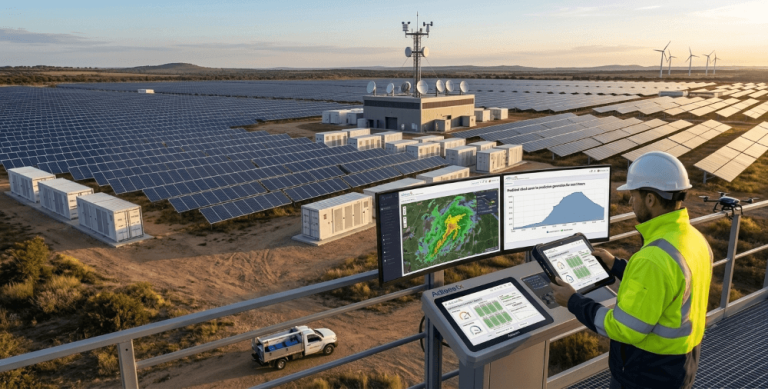
A Solar Monitoring System continuously collects operational data from solar inverters, PV arrays, combiner boxes, weather stations, transformers, switchgear, energy meters, PLCs, RTUs, sensors, and Industrial IoT devices.
Centralized Monitoring
The collected information is displayed through centralized dashboards. Therefore, operators can monitor power generation, inverter status, string performance, energy yield, irradiation, module temperature, grid parameters, and operational KPIs from a single interface.
Cloud-Based Visibility
Moreover, cloud connectivity enables secure remote monitoring, instant alarm notifications, and historical trend analysis. As a result, operators can identify performance issues early and improve plant efficiency.
Why Solar Plants Need This
Solar plants operate continuously and must generate maximum energy throughout the day. Therefore, centralized monitoring is essential for improving plant performance and minimizing generation losses.
Continuous Equipment Monitoring
Monitor solar inverters, PV strings, combiner boxes, transformers, weather stations, switchgear, energy meters, and electrical systems continuously.
Limited Visibility
Without centralized monitoring, inverter failures, string faults, communication issues, and reduced energy generation may remain unnoticed. Consequently, plant efficiency decreases while maintenance costs increase.
Faster Incident Response
Real-time alarms immediately notify operators whenever abnormal conditions occur. As a result, maintenance teams can resolve issues before significant energy losses occur.
Multi-Site Management
Many organizations operate multiple rooftop and utility-scale solar plants. Therefore, Cloud SCADA enables centralized monitoring through one secure platform.
Key Benefits of Solar Monitoring with Cloud SCADA
Real-Time Monitoring
Continuously monitor power generation, inverter status, string performance, irradiation, module temperature, grid parameters, energy production, and equipment health.
Remote Access
Furthermore, authorized users can securely monitor solar plant performance through desktop computers, tablets, or smartphones from anywhere.
Faster Fault Detection
Receive instant notifications for inverter failures, string faults, communication issues, transformer alarms, grid abnormalities, and power interruptions. Consequently, operators can respond immediately.
Improved Energy Production
Historical analytics identify generation losses, equipment degradation, and performance trends. Therefore, operators can optimize plant efficiency and maximize energy yield.
Historical Data & Reporting
Maintain operational history, energy generation reports, alarm logs, maintenance records, performance analytics, and equipment trends for engineering review.
Lower Maintenance Costs
Moreover, predictive maintenance reduces unexpected equipment failures, minimizes site visits, and lowers maintenance expenses.
How AdiCloudX Solves Solar Monitoring Challenges
AdiCloudX is a cloud-based SCADA platform designed for centralized solar monitoring. It provides complete operational visibility while simplifying solar energy management.
Centralized Monitoring
Monitor solar inverters, PV arrays, combiner boxes, weather stations, transformers, switchgear, PLCs, RTUs, sensors, energy meters, and utility systems through one unified dashboard.
Scalable Cloud Architecture
Furthermore, AdiCloudX supports monitoring of rooftop solar systems, industrial solar plants, utility-scale solar farms, and multiple distributed solar installations using secure cloud architecture.
Intelligent Alerts
Receive instant notifications for inverter alarms, communication failures, string abnormalities, grid faults, transformer issues, and other critical operational events.
Secure Remote Access
Authorized users can securely monitor plant performance, analyze historical trends, and manage solar operations from anywhere.
Solar Monitoring Use Case
A company operated multiple rooftop solar installations across different manufacturing facilities. However, manual monitoring delayed fault detection and provided limited visibility into plant performance. Consequently, energy generation declined while maintenance costs increased.
Before Implementation
- Limited visibility across multiple solar plants
- Manual monitoring of inverter performance
- Delayed identification of equipment faults
- Reduced energy generation efficiency
- Limited historical performance analysis
After AdiCloudX Deployment
- Connected solar assets to centralized cloud dashboards
- Enabled real-time monitoring and intelligent alarm notifications
- Improved maintenance through historical analytics
- Reduced equipment downtime significantly
- Increased energy generation and plant efficiency
Key Features Needed in Solar Monitoring
Real-Time Monitoring
Collect live data from solar inverters, PLCs, RTUs, combiner boxes, weather stations, transformers, energy meters, sensors, and Industrial IoT devices.
Smart Alarm Management
Support High-High, High, Low, and Low-Low alarm levels with acknowledgments, notifications, escalation rules, and complete alarm history.
Historian & Analytics
Store historical generation data, analyze equipment performance trends, identify operational abnormalities, and support predictive maintenance.
Role-Based Access
Provide secure permissions for operators, maintenance engineers, plant supervisors, energy managers, facility managers, and administrators.
Automated Reports
Generate scheduled daily, weekly, monthly, energy generation, inverter performance, maintenance, alarm, and operational reports automatically.
Anywhere Access
Furthermore, browser-based dashboards allow secure monitoring through desktop computers, tablets, and smartphones.
Future Direction
Solar power generation is rapidly adopting Industrial IoT, cloud computing, and intelligent energy management technologies. Therefore, Cloud SCADA is becoming an essential platform for digital solar operations.
Industrial IoT Integration
Connected solar inverters, weather stations, energy meters, PLCs, RTUs, transformers, and sensors continuously collect operational data. As a result, operators gain complete visibility across the entire solar power system.
Predictive Maintenance
Furthermore, advanced analytics identify inverter degradation, communication failures, and equipment abnormalities before failures occur. Consequently, maintenance teams can reduce unplanned downtime and improve plant reliability.
Smart Solar Energy Management
Cloud SCADA enables centralized dashboards, intelligent alarms, secure remote access, historical analytics, automated reporting, and multi-site monitoring. Therefore, organizations can maximize energy production, improve equipment performance, optimize maintenance, and reduce operational costs.
Frequently Asked Questions
Can AdiCloudX monitor rooftop and utility-scale solar plants?
Yes. AdiCloudX supports centralized monitoring for rooftop solar systems, industrial solar plants, utility-scale solar farms, and distributed solar installations.
Which parameters can AdiCloudX monitor?
AdiCloudX can monitor power generation, inverter status, string performance, energy yield, irradiation, module temperature, grid parameters, alarms, and equipment health.
How does AdiCloudX improve solar plant performance?
By providing real-time monitoring, intelligent alarms, historical analytics, and predictive maintenance insights, AdiCloudX helps maximize energy generation, reduce downtime, optimize maintenance, and improve overall plant efficiency.
conclusion
Solar power systems require continuous monitoring to maximize energy production, improve equipment reliability, and reduce unexpected downtime. Therefore, Cloud SCADA has become an essential solution for modern solar energy management.
Moreover, AdiCloudX combines real-time monitoring, centralized dashboards, intelligent alarms, historical analytics, secure remote access, automated reporting, and scalable cloud architecture into one platform. As a result, operators can optimize solar plant performance, reduce maintenance costs, improve operational visibility, and manage one or multiple solar installations from a single Cloud SCADA platform.
