 Skip to content
Smart Water Treatment Plants Using Cloud SCADA
Discover how modern cloud SCADA platforms like AdiCloudX help water treatment facilities improve visibility, reduce downtime, automate key processes, and manage distributed operations with greater confidence.
Introduction
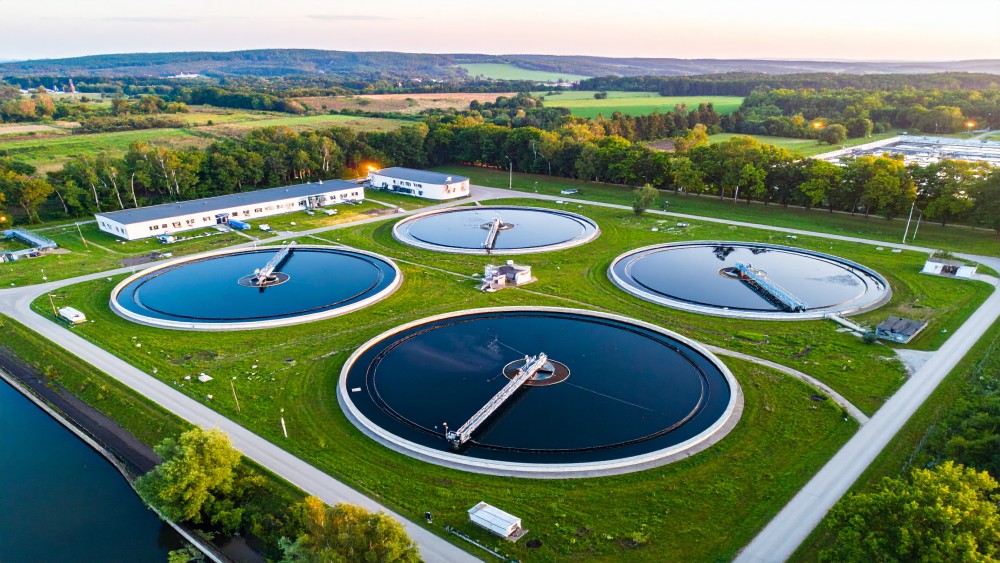
Water treatment plants play a critical role in delivering safe and clean water to cities, industries, and communities. As demand increases and compliance requirements become stricter, plant operators need better ways to manage quality, reliability, and efficiency at scale.
Traditional monitoring methods often rely on manual inspection, fragmented data, and local-only control systems. That limits visibility and slows response time when issues occur. Cloud SCADA changes that model by bringing operational data, alerts, dashboards, and analytics into one connected environment.
Why this matters
What Is Smart Water Treatment Using Cloud SCADA?
A smart water treatment plant is a digitally connected facility that uses automation, real-time monitoring, and data-driven control to manage treatment processes more efficiently.
At the center of this model is SCADA, or Supervisory Control and Data Acquisition. A SCADA system gathers live data from sensors, PLCs, pumps, valves, tanks, and treatment equipment, then presents it through dashboards for monitoring and control.
When this architecture moves to the cloud, it becomes easier to deploy, access, scale, and manage across multiple locations.
Why Industries Need Smarter Water Treatment Monitoring
Water treatment plants are made up of interconnected systems that demand precision, consistency, and constant oversight. Without centralized visibility, even small issues can become costly operational problems.
Complex Operations
Processes such as raw water intake, filtration, chemical dosing, sedimentation, disinfection, and pumping all need synchronized monitoring and control.
Limited Visibility
Manual or isolated systems make it difficult to detect abnormal conditions early and act before they affect plant performance or water quality.
Compliance Pressure
Water quality regulations require reliable data logging, reporting, and traceability for audits and operational accountability.
Distributed Assets
Utilities often manage multiple pumping stations, reservoirs, and treatment plants that need to be monitored from one unified system.
Key Benefits of Smart Water Treatment with Cloud SCADA
Cloud-based SCADA gives water treatment facilities a stronger operational foundation by combining real-time monitoring with centralized control and historical insight.
✅
Real-time monitoring
✅
Remote access
✅
Faster problem detection
✅
Improved efficiency
✅
Historical data and reporting
✅
Lower operating costs
How AdiCloudX Solves Water Treatment Challenges
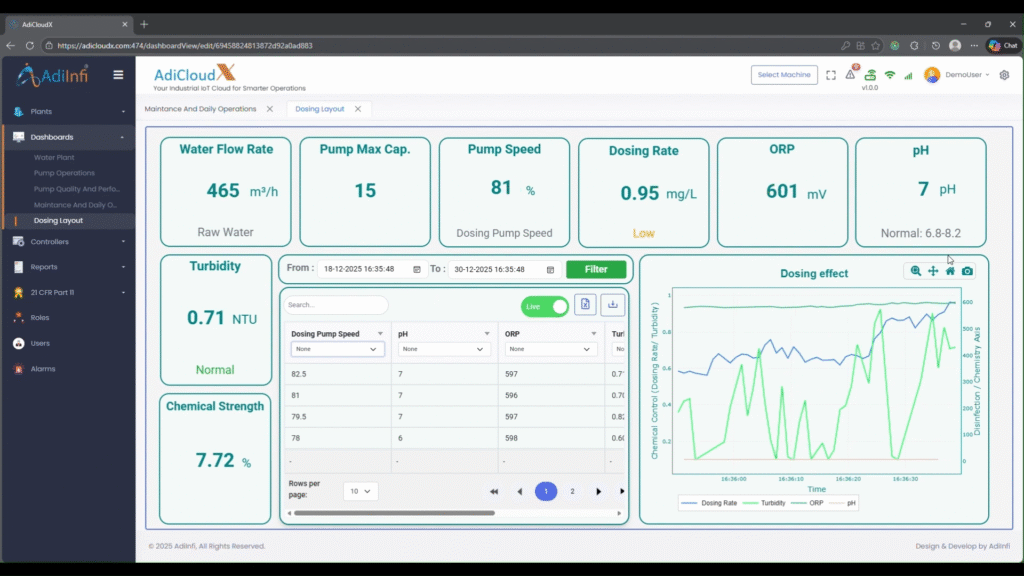
AdiCloudX is a cloud-based SCADA platform built for industrial automation and remote monitoring. It gives water treatment operators a single place to supervise equipment, processes, and performance in real time.
Centralized Monitoring
Track pumps, motors, dosing systems, filtration units, tank levels, sensors, and PLCs through one unified dashboard.
Cloud Architecture
Reduce hardware dependence, simplify deployment, and support scalable expansion across facilities.
Real-Time Alerts
Receive automated notifications when abnormal conditions appear so teams can act quickly.
Secure Remote Access
Allow authorized users to monitor plant operations securely from any location.
Operational value
Example Industry Use Case
A municipal water treatment facility operating several plants and pumping stations struggled with delayed fault detection, limited coordination, and high maintenance overhead. Cloud SCADA changed the way its teams monitored and managed operations.
Before Implementation
After AdiCloudX Deployment
Key Features Needed in a Smart Water Treatment SCADA Solution
Not every SCADA platform is built for the modern requirements of water treatment operations. The right solution should support both day-to-day control and long-term scalability.
Real-time data acquisition
Cloud connectivity
Advanced visualization
Alarm and notification system
Historical storage and reporting
Secure access control
Industrial device integration
The Future of Industrial Automation in Water Treatment
The water treatment industry is moving toward more intelligent, connected, and sustainable operations. Cloud SCADA platforms are becoming a core part of that transformation.
Industrial IoT integration
Smart infrastructure investment
Cloud-first monitoring
Frequently Asked Questions
What makes a water treatment plant “smart”?
A smart water treatment plant uses connected sensors, automation systems, centralized monitoring, and analytics to improve operational control, water quality, and response speed.
Why is cloud SCADA useful in water treatment?
Cloud SCADA enables real-time remote access, centralized monitoring, alarm management, and scalable deployment across multiple treatment facilities and pumping stations.
How does AdiCloudX help reduce downtime?
AdiCloudX provides live system visibility, automated alerts, and historical performance tracking so operators can identify abnormal conditions earlier and act before failures become major disruptions.
Conclusion
Water treatment plants need reliable monitoring, automation, and operational intelligence to meet growing demand and maintain quality standards. Smart water treatment powered by cloud SCADA helps plants move beyond reactive operations into a more connected, efficient, and resilient model.
With real-time dashboards, centralized visibility, secure remote access, alarms, analytics, and scalable architecture, platforms like AdiCloudX help modern facilities operate with more control and confidence.


